Showing posts with label Links Magazine. Show all posts

2026/08/07

Eduardo Miguel Álvarez Estévez: Cuba: Where is the Russian oil? The truth that Moscow silences

Eduardo Miguel Álvarez Estévez discusses Cuba: Where is the Russian oil? The truth that Moscow silences (translated by Jackson Remple).

The uncomfortable truth as to why Russia is not forcing the US oil blockade of Cuba is that:

As far as Russia is concerned, Cuba is a pawn on the geopolitical chessboard. It is a means of applying pressure on Washington. A base for strategic bombers. An anti-imperialist symbol that helps Russia gain prestige in the Global South. But it is not a vital priority for Russia. It is not Ukraine. It is not the Arctic. It is not on Russia’s immediate border.

When the going gets tough, Moscow chooses its battles. And the battle to supply oil to Cuba is not on its list of priorities.

Emphasis Mine

As Henry Kissinger once said, "Great nations do not have friends, only interests." Cuba found this out before with the Cuban Missile Crisis and the collapse of the USSR.

Although the US oil blockade of Cuba strengthens the American geopolitical position within the Western Hemisphere, the long term trajectory is to weaken the USD system as nations wake up to the inherent coercive power the USA has with the USD sytem.

Uncle Sam and a Russian Bear are at a chess board overlaying the Gulf of Mexico. One of the pawns on the board is labeled 'Cuba'. Another pawn, with the label 'Venezuela' is lying down off the board.


Read more!

2023/11/10

Jörn Schütrumpf and Rosa Luxemburg: The Breakdown of Unity in the RSDLP

Jörn Schütrumpf discusses Rosa Luxemburg: The Breakdown of Unity in the RSDLP.

Lenin, by the way, was not innovative at all in this work. He merely repeated positions advocated by Marx and Engels 60 years earlier. By contrast, in 1922, three years after Rosa Luxemburg’s death, Lenin became quite enterprising and joined the list of male authors (other genders have probably signed up since) who hide behind Rosa Luxemburg quotes that they themselves made up: “‘German Social-Democracy has been a stinking corpse since 4 August 1914’ — this statement will make Rosa Luxemburg’s name go down in the history of the international working-class movement.’”

Although it is obvious that a Polish intellectual would never allow herself to come across in such a “Russian” way, unfortunately we must acknowledge that Lenin’s forgery was a successful one. Rosa Luxemburg has in fact gone down in history with this mindless nonsense, and on a global scale at that. Poor Rosa.

Emphasis Mine

Schütrumpf obviously sides with Luxemburg against Lenin. Schütrumpf and Luxemburg accuses Leninism of promoting fractionalism. Schütrumpf argues that Lenin has defamed Luxemburg in order to deflect Luxemburg's accusation.

Rosa Luxemburg writes:

Experience had convinced the overwhelming majority of Bolsheviks that the Leninist policy of organizational withdrawal into a narrow circle was extremely conducive to opportunism and detrimental to the revolutionary wing of Social Democracy: instead of attaining commanding influence over the whole party and rally it behind them, the Bolsheviks erect a factional wall that cuts them off from the party, thus condemning themselves to impotence.

Lenin’s organizational views, which had been swept from the face of Russian Social Democracy by the revolution and by the restoration of party unity, could only thrive again in an atmosphere of party disintegration, generated by the counterrevolution in general and by the liquidators in the ranks of the party in particular. Leninism, in its narrowness and with its sectarian organizational views, knows no other means of combating opportunism than to expel from the party anyone who disagrees. This is why Leninism is by its nature a policy of perpetual splits.

Emphasis Mine

When Luxemburg wrote this (1912), Lenin and the Bolsheviks were indeed swept from the vanguard of the revolutionary movement. It was only after the July days in 1917 that Lenin was able to lead the Bolsheviks to the forefront of the revolutionary movement. Between July and October 1917, the Bolsheviks emerged as the face of the revolution. The other revolutionary factions had faded or merged them selves into the Bolshevik faction of the RSDLP (especially Trotsky).

Luxemburg concludes (in July 1912):

The reunification of Social Democracy into one single party at the Stockholm Party Congress was the product and achievement of the 1905–6 revolution. Like many other accomplishments of the proletariat, this fruit of the revolution was wrested from us by the triumph of counterrevolution. The liquidationist tendency emerged and grew stronger under the impact of counterrevolution; mindless Leninism also thrived again, and the two tendencies have together brought about the collapse of party unity.

But now, a revolutionary movement has arisen among the working masses. And this movement is the surest guarantor of the imminent resurrection of the RSDLP under the banner of revolutionary Marxism.

Emphasis Mine

Luxemburg's hope were dashed by the events of 1917. Factions and persons that seemed revolutionary prior to 1917 faded or failed to maintain or adjust their revolutionary positions in reaction to the progress of the Russian Revolution.

Because of her murder during the German Revolution of 1918–1919, we don't know if Luxemburg would have reconsidered her position on Leninism in the aftermath of the October Revolution. If the German Revolution had succeeded, and a German Soviet Republic managed to survived, it is more likely the focus of the worldwide Communism would be in Berlin rather than in Moscow. Luxemburg's opinions would then have more weight than Lenin's.


Read more!

2023/10/06

Dave Holmes: Ukraine: US proxy war in crisis

Dave Holmes discusses Ukraine: US proxy war in crisis

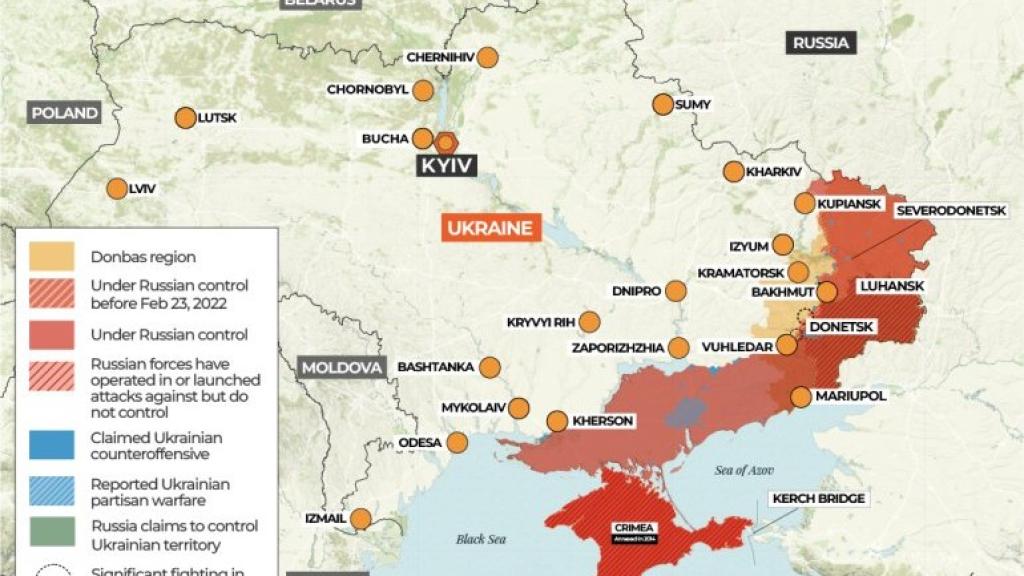
Much of the Western left is blinded by the deeply mistaken idea that Ukraine is fighting for self-determination against an attempted Russian takeover. I have taken up this question in a previous article (see Key issues of the war in Ukraine).

Russia is not seeking to take over Ukraine; it wants to secure its neutrality and demilitarisation. After eight fruitless years trying to achieve the implementation of the Minsk accords giving autonomy to the Donbass, Russia intervened in the already existing civil war between Kyiv and the Russia-oriented provinces in the south.

Emphasis Mine

He argues that Ukraine is in a far worse negotiating position than they were in April 2022. Now, Russia is against a freeze or cease-fire given the Russian view that they were deceived over the Minsk accords.

The Russian negotiating position now appears to be capitulation or extinction of the Ukrainian state. Some Russian voices are advocating control of Odesa, Mykilaiv, Dnipro, and Kharkiv oblasts in addition to the five (5) already annexed.

The de-industrialization of the West has weaken its ability to supply the Ukrainian Armed Forces. There is the incredible claim that Russia's military production is currently seven (7) times that of NATO.

Ukraine map


Read more!

2023/09/12

Comments on "Cultural hitchhiking and competition between patrilineal kin groups explain the post-Neolithic Y-chromosome bottleneck"

I compare "Cultural hitchhiking and competition between patrilineal kin groups explain the post-Neolithic Y-chromosome bottleneck" with "Patriarchy and the origins of women’s oppression" by Sue Bull.p>

Bull (2023) write:

But the clan system started to break down under the pressure of a family system propelled by husband headed family units based on the individual labour of men in ploughing and herding. Boyle goes on to say: “Private property first developed through a gradual privatisation of communal property by an elite that used religion and war as cover and justification. In the process, women, like slaves, land and livestock, become their private property.”

It is in this context that inheritance became critical. Now, men wanted to prove that their children were their own, so monogamy intensified for women and their confinement became a growing requirement. Brewer notes: “inheritance led to accumulation of wealth over generations, developing the social hierarchies of class, status and power… It is ironic that while the discovery of farming by women at the beginning of the Neolithic period was such a positive leap forward, by the end of the Neolithic it had changed into a negative outcome for women… their subordination and powerlessness in the developing class society and all class formations from that time onwards.” In other words once women lost their direct role in agricultural production, they lost their status, power and equality as well.

It is likely that all of this was developing before and during the first fully formed class society of ancient Sumer, about 5000 BC, and patriarchy was developing too.

Emphasis Mine

Bull (2023) contends that the emergence of the patriarchy was a consequnce of the change of gender roles during the transition to agriculture from hunter-gatherer. Bull quotes Boyle saying that private property was the primary driver for the establishment of the patriarchy.

Zeng et.al. (2018) notes that:

In human populations, changes in genetic variation are driven not only by genetic processes, but can also arise from cultural or social changes. An abrupt population bottleneck specific to human males has been inferred across several Old World (Africa, Europe, Asia) populations 5000–7000 BP. Here, bringing together anthropological theory, recent population genomic studies and mathematical models, we propose a sociocultural hypothesis, involving the formation of patrilineal kin groups and intergroup competition among these groups. Our analysis shows that this sociocultural hypothesis can explain the inference of a population bottleneck. We also show that our hypothesis is consistent with current findings from the archaeogenetics of Old World Eurasia, and is important for conceptions of cultural and social evolution in prehistory.

Emphasis Mine

It would appear that the emergence of the patriarchy had a devasting impact on males as only about 6% were able to pass on their genes across the Y-chromosome bottleneck. What is more interesting that cultural changes were able to emerge after about a 1,000 years to remove that bottleneck. That cultural change was able to preserve elements of patriarchy while expanding the percentage of males able to pass on their genes.

This improved model of the patriarchy has been able to survive for about 6,000 years. This longevity means that patriarchy solves cultural problems. In order to overthrow the patriarchy, one must devise alternate solutions to the cultural problems that the patriarchy currently solves. And these alternate solutions need to be acceptable to enough males that the cultural changes gain traction.

The question is what cultural problems patriarchy solves. This needs further investigation.

Каменный век (1)

References

Bull, S. Patriarchy and the origins of women’s oppression, 16 July, 2023, https://links.org.au/patriarchy-and-origins-womens-oppression

Zeng, T.C., Aw, A.J. & Feldman, M.W. Cultural hitchhiking and competition between patrilineal kin groups explain the post-Neolithic Y-chromosome bottleneck. Nat Commun 9, 2077 (2018). https://doi.org/10.1038/s41467-018-04375-6


Read more!

2023/09/06

Jerry Harris: Marxism and Ukraine’s struggle for independence and self-determination

Jerry Harris discusses Marxism and Ukraine’s struggle for independence and self-determination

Determining the principal contradiction has important practical results that reveal splits in the left. If the principal contradiction is between Ukraine and Russia, then Ukraine has a right to self-defense and the right to obtain arms. Just as Vietnam had the right to obtain Chinese and Soviet arms to defend itself against the US invasion. In fact, an international boycott of arms to Ukraine would only result in their defeat and a successful annexation by Russian forces. On the issue of ending the war, Ukraine must be the primary negotiator over its own fate, and the leading voice in the determination of its own future.…

Understanding US/Russian tensions as a secondary contradiction does not mean ignoring the reality of great power competition. It still means that the US needs to be part of the negotiations, that the US did meddle in the Maidan uprising, and that NATO was aggressive in its push eastward. But it does not obscure the Russian invasion as the principal problem, nor relegate Ukraine to a secondary role and its full independence to a secondary question, to be determined by an agreement between great powers. Lastly, when left realists accept Russian security concerns as the motivation for the invasion, it weakens our ability to convince people to take an anti-war stance when the US declares the exact same security reason for its next invasion. Reaffirming the long-standing principle of independence and self-determination must be maintained as the clear dividing line between socialist and imperialist worldviews.

Emphasis Mine

What Harris misses in his analysis is whether the people of the Crimea, Donetsk, Kherson, Luhansk, Lviv, and Zaporizhia, have the same rights as Ukrainians in general for self-determination. Harris fails to mention that a pretext for the invasion by the Russian Federation was given by President Putin at the Security Council meeting on 22 February 2022:

Those people declared that they were establishing two independent republics, the Donetsk People’s Republic and the Lugansk People’s Republic. This was the point when the confrontation started between the Kiev officials and the people living on that territory.

In this context, I would like to point out that Russia initially did everything it could to make sure these disagreements could be resolved by peaceful means. However, the Kiev officials have conducted two punitive operations on those territories and, apparently, we are witnessing a third escalation.

All these years – I want to stress this – all these years, the people living on those territories have been literally tortured by constant shelling and blockades. As you know, the people living on those territories, close to the front line, so to speak, were in fact forced to seek shelter in their basements – where they now live with their children.

A peace plan was drafted during the negotiating process called the Minsk Package of Measures because, as you recall, we met in the city of Minsk. But subsequent developments show that the Kiev authorities are not planning to implement it, and they have publicly said so many times at the top state level and at the level of Foreign Minister and Security Council Secretary. Overall, everyone understands that they are not planning to do anything with regard to this Minsk Package of Measures.

Nevertheless, Russia has exerted efforts and still continues to make efforts to resolve all the complicated aspects and tragic developments by peaceful means, but we have what we have.

Our goal, the goal of today’s meeting is to listen to our colleagues and to outline future steps in this direction, considering the appeals by the leaders of the Donetsk People’s Republic and the Lugansk People’s Republic on recognising their sovereignty, as well as a resolution by the State Duma of the Russian Federation on the same subject. The latter document urges the President to recognise the independence and sovereignty of the Donetsk People’s Republic and the Lugansk People’s Republic.

Emphasis Mine

Various other authors have dismissed the legitimancy of those oblasts' claims to sovereignty as merely Russian machinations.

The sovereignity of Ukraine is counterpoised against that of Donetsk and Lugansk.


Read more!

2021/12/02

Claudio Katz: China: Neither imperialist nor part of the Global South

Claudio Katz argues that China is neither imperialist nor part of the Global South.

Dependency presupposes the existence of a state subject to external orders, requirements or conditioning, while imperialism implies the opposite: international supremacy and a high degree of external interventionism. These should not be intermingled in the same formula. In China the lack of subordination to another power coexists alongside great restraint in its involvement with other countries. This is neither dependency nor imperialism.

Katz is arguing is that China is not an imperialist power as it does not intervene directly in the affairs of other nations through the use of military force or economic coercion. This is a big change from the period prior to the 1990's when China tried to invade Vietnam, supported Maoist guerillas, and intervened directly into the Korean conflict.

Nor is China a dependent power like Australia in which we have to follow the lead of the USA in military and political matters.

Those who are unaware of this difference tend to denounce China and the United States alike as aggressive powers. They situate the two contenders on the same plane and stress that they intervene indifferently in those conflicts.

But this neutralism fails to note who is primarily responsible for the tensions that shake the planet. It fails to see that the United States sends warships to its rival’s coast and raises the tone of its accusations in order to generate a climate of growing conflict.

Katz is arguing that China is acting defensively. This defensiveness has to be seen in the presence of US bases in South Korea, Japan, Guam, and others. China has no comparable presence near the USA.

China does not suffer the outflows that typically drain the dependent countries. It is exempt from the trade imbalance, technological deficiency, scarcity of investment or strangling of purchasing power. There are no data from today’s China suggesting that its stunning economic might constitutes a mere statistical fiction.

This trade surplus allows some freedom of action for China on the world stage. And it is this freedom that is an affront to the US.

But these cheerful portraits overlook the fact that the consolidation of capitalism accentuates in China all of the imbalances already generated by overproduction and surplus capital. These tensions, in turn, accentuate inequality and deterioration of the environment. Ignoring these contradictions prevents us from noting how China’s defensive international strategy is undermined by the competitive pressure imposed by capitalism

Katz puts this contradiction as the core problem for China. While Capitalism has delivered stunning economic growth and properity for China, the need for ever-expanding markets brings it into sharp conflict with the hegemonic power of the USA.

In the short term, there is the robust rise of China in the face of an obvious decline of the United States. China is winning the dispute in all areas and its recent management of the pandemic is a confirmation of this. Beijing quickly achieved control over the spread of the infection while Washington coped with an overflow of cases that left the country with one of the highest numbers of deaths.

The pandemic has hastened the decline of the USA. And it is this decline that makes the USA more dangerous as it tries to maintain its hegemony. But we should also be wary of China as the Capitalist contradictions impel it towards imperialism.


Read more!

2020/06/12

Chris Slee: Capitalism and workers struggle in China

Chris Slee writes about Capitalism and workers struggle in China.

Picture of Chinese strikers

China's economy is now essentially capitalist, as indicated by the privatisation of the bulk of the means of production, and the conversion of labor power into a commodity. Workers can only survive by selling their labor power to an employer.

But the most extreme ideologues of neoliberalism (both in China and elsewhere) are not satisfied with the degree of privatisation that has occurred so far. State-owned enterprises remain dominant in certain strategic industrial sectors such as iron and steel, electricity and telecommunications, and in the banking sector. The neoliberals want more complete privatisation, and unfettered access to all areas of the economy for local and foreign capital.

The Chinese Communist Party has up to now resisted these pressures. A strong state sector helps China maintain a degree of independence from the Western imperialist powers.

…

If this is the case, it is not unprecedented in the history of capitalism. State ownership of key industries can sometimes be beneficial for the functioning of the capitalist system as a whole. The British government nationalised the coal mines after the second world war. This did not mean that Britain had become socialist. Similarly, China's economy remains fundamentally capitalist, despite some cases of re-nationalisation in the wake of the global financial crisis.

Emphasis Mine

Slee concludes:

Despite the partial reversal of some neoliberal policies, China remains a highly unequal society, where workers are ruthlessly exploited and lack job security. The state remains capitalist. It represses the resistance of the workers to capitalist exploitation.

The air and water are extremely polluted. Despite significant investment in renewable energy, the use of fossil fuels continues to expand, and China is now the world's biggest producer of greenhouse gases.

Minorities such as the Tibetans and Uighurs continue to be oppressed. Freedom of speech continues to be restricted.

A struggle for genuine socialism still remains necessary. This struggle will need to bring together workers, students and other oppressed groups. An example of such unity is the solidarity of university students with workers at Jasic Technologies. This kind of solidarity, if repeated on a much larger scale, can help take China on the road to socialism.

Emphasis Mine


Read more!

2019/07/12

John Riddell: On the democratic character of socialist revolution

John Riddell writes On the democratic character of socialist revolution.

All experience shows that the electoral process under capitalism is constrained by the surrounding institutions of the capitalist state and economy, which prevent elected governments, under most conditions, from initiating radical social change.

Movements for social change usually run far ahead of the electoral process or bypass it entirely. For example, the great mass movement in the U.S. for Afro-American human rights in the 1950s and 1960s gained ground through a campaign of non-violent mass action that defied existing segregationist laws and endured fierce and brutal police repression and rightist violence. Dozens of activists for Black freedom were murdered before their movement won significant legislative support.

In a similar way, the movement for abortion rights in Canada mobilized in the streets in the face of a campaign of widespread rightist violence that killed ten supporters of abortion rights in the U.S. and attacked many others in Canada. The movement in Canada openly defied existing prohibitions, winning mass support to the degree that the reactionary law against on a woman’s right to choose became unenforceable. Only at that point did parliament take action, repealing the reactionary law.

Great social movements redefine legality and human rights, setting in motion a process of change that becomes irresistible. Socialists utilize electoral opportunities while recognizing that they are far from the whole story.

A workers’ government committed to socialism will probably be achieved as the democratic ratification of a program that has already gained majority support through discussion and mobilization among the population at large.

Emphasis Mine

Riddell contends that too many Socialists are enamoured of the insurrectionist nature of the Bolshevik revolution. This has enabled the security services to persecute Socialists in preventing the overthrow of the State.

Riddell argues correctly that Socialists should work for the expansion of democratic rights with the view to transition to a Socialist state through democratic means. In 1917, this path was blocked by the provisional government as it flirted with a military dictatorship in order to suppress the Workers' Soviets. Then the insurrection became self-defense.


Read more!

2017/07/14

Shamus Cooke: Why can't the left get Venezuela right?

Shamus Cooke asks Why can't the left get Venezuela right?.

If working and poor people actively engage in the process of creating a new, more progressive constitution and this constitution is approved via referendum by a large majority, it will constitute an essential step forward for the revolution. If the masses are unengaged or the referendum fails, it may signify the death knell of Chavismo and the return of the oligarchy.

And while Maduro is right to use the state as a repressive agent against the oligarchy, an over reliance on the state repression only leads to more contradictions, rather than relying on the self-activity of the workers and poor. Revolutions cannot be won by administrative tinkering, but rather by revolutionary measures consciously implemented by the vast majority. At bottom it’s the actions of ordinary working people that make or break a revolution; if the masses are lulled to sleep the revolution is lost. They must be unleashed not ignored.

It’s clear that Maduro’s politics have not been capable of leading the revolution to success, and therefore his government requires deep criticism combined with organized protest. But there are two kinds of protest: legitimate protest that arises from the needs of working and poor people, and the counter-revolutionary protest based in the neighborhoods of the rich that aim to restore the power of the oligarchy.

Emphasis Mine

The problem has always been how the working class develop confidence in itself. Workers are continually being isolated and humilated. Survival takes all of our energy.

This is the importance of a revolutionary party in its mission to develop cadre. The party develops itself through experience from historical action, reflection on that experience through theory, and action from deliberation on that theory in solidarity with others.


Read more!

2017/07/11

Socialist Project: Working classes and the rise of the new right: Socialist politics in the era of Trump

Socialist Project examines Working classes and the rise of the new right: Socialist politics in the era of Trump.

The point is, we need a socialist politics that embraces yet transcends identity politics through making universal claims for social as well as environmental justice, for decommodified social services, for better wages and working conditions. An anti-racist politics needs to emerge directly from struggles that address the material conditions by which we produce, distribute, and consume. Only in that way will we be able to transcend the debilitating ‘guilting’ rhetoric so prevalent on the left today. Only in that way will we be able to transcend the tendency, even in today’s trade unions, to address class issues in identity-representational terms rather than on the basis of universal claims.

The political significance of the far right in the current political conjuncture must make us sensitive to the danger of an imminent closure of the democratic space upon which the left depends to develop and grow, and which indeed makes socialist working class organizing possible. This raises the question of a ‘popular front’ strategy, whereby socialists’ political activism would be thrown behind liberal forces facing an existential challenge to their hegemony from a neo-fascist right. The magnitude of this far-right threat suggests that socialists should support those forces seeking to defend liberal democratic institutions against any and all moves to foreclose the freedoms they support.

But we must not lose sight of the need to build the socialist movements and form political alliances and fronts, so tragically absent amidst the traumas of neoliberalism, capable of reinvigorating class struggles, of confronting corporate power and the capitalist class, of addressing the environmental and social as well as economic and political crises of our time. The capacity to envision and push forward the serious, bold programs to fundamentally transform and democratize the state we so urgently need can only emerge through this process of struggle and organization.

Emphasis Mine

As seen in Turkey, the authoritarian state grows through democratic means as the dispossessed seek to take power away from the establishment. As Ted Rall wrote, 'Trump is a brick thrown through the window panes of the establishment'. Thus, the weeds of Fascism grow as people see that the only solution is to have a strong leader lead them to the Promised Land. But, the reality is that they will be led into the desert to die.


Read more!

2017/01/02

Arash Azizi: After Trotskyism, what? Some personal thoughts

Arash Azizi writes about After Trotskyism, what? Some personal thoughts.

Marxists and those (like myself) who have an affinity for the 1917 tradition need to unite with others around the political and practical double goals of: 1) improving the lives of the working people and the oppressed here and now, and; 2) striving at a radical transformation of society and building of a socialist alternative to capitalism.

The strategies toward these goals will differ in different countries, based on their political conditions, the balance of classes and the existing organizations and traditions. In general, however, there is a basic fact that the revolutionary left needs to come to peace with: It needs to win power by convincing a majority of a population to support its vision. This doesn’t necessarily have to mean basically turning into an electoral machine. To slightly paraphrase Eugene Debs, elections are to socialism what a menu is to a meal. It is a fact, however, that the liberal democratic order, a system in which the government of the day is elected on the basis of universal suffrage, is now dominant across much of the globe (it is worth remembering that in Lenin’s time, it was almost entirely non-existent, hence a long Marxist struggle for universal suffrage) and wherever it isn’t, it is probably an imperative for us to unite with liberals for democratic goals. Democratic conditions can actually offer an excellent opportunity for socialists: Build support for our vision; convince a majority that we can offer a workable, real socialist alternative; and come to power and start implementing it! Of course, there would be resistant from the capitalist class and, of course, our strategy needs to take that into account too. But to move against a democratically-elected government is not an easy task, especially if it is based on an active support of millions of workers.

This might seem very mundane at the first glance but, ask yourself, how many socialists and revolutionaries are asking themselves: How can we build an organization that is ready to win support of the majority and form a government? How many are telling themselves: “The test of socialist politics is how I can win over large numbers of people, which is possible by meeting them where they are at, not by trying to be the most left-wing guy in the room?”

In asking such questions, we’d need to be forward-looking and accept that not all differences need to be solved for leftist to unite in an organization. It is silly for socialists not to be organizationally united in pursuit of goals today because they disagree over the class nature of the Soviet Union or because they have a slightly different take on the Palestinian struggle.

Building of leftist institutions that are something beyond their name, real organizations that can represent a significant portion of a country’s politics, is a very difficult task but it is rewarding at the end. It will influence the lives of the working people here and now, it will consolidate our power and it will offer a clear route to power. It will also create a space that could help blossom the kind of thinking that is needed to address the massive questions that we will face if we are to actually conduct the mammoth task of transition to socialism.

Needless to say, in building such vehicles we should never abandon the organizations that the working class has already built which, almost all over the world, means the parties that historically belong to the Second or Third Internationals. One of the mistakes of the left has been prematurely abandoning these organizations whereas the recent victory of Corbyn in the UK shows that even if your organization is led by the likes of Tony Blair, there is a chance that the left could come to power in them and start their transformation.

What we need more than ever is an end to the mentality of small circles and an audacity to prepare for real socialist change in our own lifetimes. It is time to offer the working people, our people, the political instrument that it deserves.

Emphasis Mine

Azizi's argument is for Socialists to engage with the Labour parties of the world. They are where the workers are—both physically and intellectually.

The Socialist Alliance has sufferred several splits over the years:

  1. 13 May 2008
  2. 2-3 July 2016

The position of the Socialist Alliance on the Australian Labour Party is:

The Australian Labor Party (ALP), formed more than a century ago by trade union officials and sections of the intelligentsia, now acts as a systematic agent for capitalist rule in the labour movement.

ALP governments have always defended the interests of the capitalist system and worked to contain trade union and other social movement struggles within the framework of capitalist parliamentary politics.

The ALP has fostered parliamentarism, class-collaboration, racism, xenophobia and protectionism as ways to divert the working class from seriously confronting the capitalists and their governments. It has promoted the false idea that workers in Australia have more in common with their ‘Australian’ bosses than with the working masses in other countries — particularly in the colonial and semicolonial countries. Therefore, a central part of socialist struggle in this country today is to win the working class away from the conservative domination of the ALP.

While it still retains a significant base in the working class, all ALP governments since the 1980s have played a leading role in the capitalist neoliberal offensive. With the collaboration of the trade union bureaucracy the Labor leadership has severely weakened the trade union movement and constrained it from taking independent mass action.

In this period the ALP has increasingly abandoned championing new reforms — or even defending previously won reforms — in the interest of the working class and other oppressed groups.

Emphasis Mine

The political situation in Australia has not given rise to SYRIZA, Corbyn, or Sanders. So, we cannot use those experiences in the Australian context. We need to be where the workers are, not where we think they should be.


Read more!

2016/05/26

Eric Blanc: Party, class, and Marxism: Did Kautsky advocate 'Leninism'?

Eric Blanc discusses Party, class, and Marxism: Did Kautsky advocate 'Leninism'?.

Experience over the past decades would seem to demonstrate that while non-Marxist broad parties cannot effectively transcend capitalism, projects of building Marxist parties will likely flounder if they are divorced from wider efforts to promote a mass political representation of and for the working-class majority. Socialists today might do well to rediscover Kautsky’s forgotten 1909 contribution and to reconsider its strategic conclusion:

It is not a question as to whether we prefer a small resolute Social-Democratic Party to a big class party with no definite programme … A Socialist organisation of the S.D.P. type is as insufficient by itself as the Labour Party. We must encourage both.

Emphasis Mine

This would mean that the Socialist Alliance should continue with other parties like the Greens and with groups within the Australian Labour Party on common issues like Workers' Rights, defending Trade Unions, Refugees, Environmental Issues, etc.


Read more!

2016/05/13

Salar Mohandesi: The Afterbern: How Bernie Sanders has changed the US and what we do now

Salar Mohandesi writes about The Afterbern: How Bernie Sanders has changed the US and what we do now.

What we have emerging, then, is a new, diverse cohort of predominantly young people, the majority of whom belong to the working class or a collapsing “middle class,” now open to socialist ideas, clamoring for systematic change, and who are increasingly networked, trained, and experienced in organizing. The vast majority of these people are, like Bernie, not socialists in any specific historical sense, but they are willing to fight for major changes. The potential here is enormous, and for this, we have to thank the Sanders campaign, whether or not we like Bernie’s social democratic politics.

The major question, of course, is what happens next. It’s very possible that these young, politicized Sanders supporters will be incorporated into the Democratic Party. If Bernie wins the nomination, the risks are enormous. But even if he doesn’t, which seems far more likely now, he may produce the same effect if he throws his weight behind Clinton at the Convention in July. Or possibly, if Hillary emerges victorious, she may tap someone like Elizabeth Warren to serve as Vice President as part of some calculated strategy to win over Bernie’s supporters. It is also safe to assume that the Democratic Party will itself try to make the most of this opportunity by organizing many of these young people into its ranks. All this highlights the great contradiction of Bernie’s campaign: he would not have reached — and radicalized — such a vast audience if he did not run as a Democrat, but in working within the Democratic Party, he has potentially wedded this new audience to perhaps the greatest counter-revolutionary force in the United States.

Emphasis Mine

This is normal for the start of a revolutionary process. People want to fix the system from within. When this fails, then they either choose despair or radicalization.

It is significant that people are still relatively radical after seven (7) of Obama's inertia. The desire for change generated by George W Bush was channelled by Barak Obama into a safe Democratic presidency. Obama was successful in limiting the damage from the radical demands of the people.

Our chances for such a qualitative leap are more propitious than they have been in decades. The established political configuration in the United States hasn’t been this vulnerable since the 1970s. The Republican Party is undergoing a profound structural transformation, and Trump’s impending nomination has provoked defections and a potential mutiny. The Democratic Party is being pulled in two directions and may be headed for a contested convention. Record numbers of Americans are leaving both parties ­— 43% now identify as Independents, as opposed to 30% as Democrats and only 26% as Republican. Across the board tens of millions of Americans are rejecting “establishment politics,” turning to either Trump or Sanders.

We should also be encouraged by the fact that many of these newly radicalized Sanders supporters may already be prepared to break with the logic of the political system — according to one poll, for instance, one third of Sanders supporters say they won’t vote for Clinton in the general election. But without a viable alternative in the form of an organizational presence, we won’t be able to transform this inchoate #BernieOrBust sentiment into revolutionary politics. And if, against all odds, Sanders wins, it is very likely that only a unified, alternative organization embedded in today’s many ongoing struggles can prevent radicalized Sanders supporters from integrating into a fundamentally unreformable Democratic Party. In short, we need an organization to fuse together the millions of enthusiastic people who may otherwise disperse or find themselves subsumed and then disorganized by the state apparatuses.

With such exceptionally high stakes, the far left, usually so minuscule and ineffectual in this country, needs to devise a shared, coherent organizational strategy. Now, more than ever, we need an organization to continue radicalizing newer generations, keep people engaged in contemporary struggles, unite disparate movements, articulate different sectors of the working class, preserve continuity between waves of struggles, fashion a common project, and, above all, seize power — by which I do not mean simply winning a couple seats in Congress as some purely electoral party, but overthrowing capitalism through a mass revolutionary upheaval that unfolds both against and within the state apparatuses. There hasn’t been this much interest in radical change, nor this much anger against capitalism in the United States since the 1970s. If we, as committed socialists, miss this moment, the future will never forgive us.

Emphasis Mine

Co-option by the Democratic Party has been successfully used in the past to defuse radicals. Will it work in future?


Read more!

2016/05/12

Doug Enaa Greene: The rise of Marxism in France

Doug Enaa Greene describes The rise of Marxism in France.

Engels recognized the danger of a Boulangist dictatorship as spelling the end not only to the socialist movement in France, but the Third Republic itself. For him, the question was not just how to analyze Boulangism, but how to fight it.

Engels was enraged at the passivity of the POF, writing of the general's ties to royalists and that his threat of war would be used to kill off the workers' movement. Engels warned the socialists not to let their hatred of the radicals and the Republic blind them to the threat of dictatorship.

You will get him all the same, the good Boulanger whom you crave, and the Socialists will be his first victims. For a First Consul has got to be impartial and, for every time he lets the blood of the Stock Exchange, he will place another curb on the proletariat, if only to even things out.[39]

Engels told the workers that the defense of democracy was vital, so vital in fact, that its defense could not be left to the bourgeoisie. Rather the preservation of democratic freedoms needed to be led by the socialists, utilizing revolutionary means.

However, Engels' castigated Lafargue's tailing of Boulanger, warning that it was not the job of socialists to just go along with the tide, even if it appeared momentarily popular, stating that such a course was bankrupt. Rather, socialists needed to take a long-term view and not just follow whatever was popular:

But if we are not to go against the popular current of momentary tomfoolery, what in the name of the devil is our business?[40]

MWhat Engels stressed to Lafargue and Guesde was that the options before them were not simply between the Opportunists and Boulanger, but that there was a third option of independent political action by the working class. He urged the socialists to put up their own candidates, opposed to those of both camps. When the Marxists put up their own candidate in Paris in 1889, Engels hailed it as “at least one step in the right direction by proclaiming the necessity of an independent socialist candidature.”[41] As Engels, reminded Lafargue, “For the past twenty years we have been advocating the formation of a Party that was distinct from and opposed to all bourgeois parties.”[42]

What Engels advocated to the POF, was not renouncing the fight against Boulanger or seeing it as just another inter-bourgeois affair, but that the working class needed to protect democratic freedoms with their own revolutionary means, as opposed to relying on the good graces of the ruling class or the ballot box. And in order to defeat reaction, the working class needs their own flag in the field — an independent political party with its own revolutionary agenda.

Emphasis Mine

Engels' critique of the POF (French Workers' Party) proved to right as later events revealed:

By the early 1890s, the POF had its first electoral breakthroughs, winning control of several municipal governments and electing Guesde and Lafargue to the Chamber of Deputies. The socialists seemed poised for greater gains in wake of the Panama Corruption scandal, which exposed the underlying bourgeois nature of the Third Republic. However, the POF suffered a serious setback by remaining aloof from the Dreyfus Affair. Guesde believed that the Dreyfus Affair, similar to the Boulanger Crisis, was a feud between two bourgeois factions in which workers had no stake. This time, their neutrality backfired as it became clear that reactionaries, conservatives and royalists were threatening to overthrow the Republic itself. Reformist socialists, such as the great orator Jean Jaures, thus stepped into the breach and rallied to the defense the Republic. Many Guesdists abandoned the movement's neutrality in order to collaborate with bourgeois republicans and reformists in a pact of “Republican Defense“ to defeat reaction.

Emphasis Mine

As revolutionaries, we can stand aloof from the democratic struggle. Politics is in both the mass movements and the electoral process.


Read more!

2016/05/11

Links Magazine: Thinking and voting outside the two-party box: Interview with US Green Party presidential nominee Jill Stein

Thinking and voting outside the two-party box: Interview with US Green Party presidential nominee Jill Stein.

We say that not only do we have to bring the revolution to our workplaces, our schools and our streets, but we have to amplify that power in the context of the elections. The elections should not be allowed to silence what's really happening in the struggles that our frontline communities are leading.

Elections need to be used as a megaphone for the struggles for social, climate and racial justice. That's how we've defined the purpose of our campaign from the very start.

At the end of the day, the real engines of change are the social movements, but it's critical that they fight for power in the electoral arena, because that's where you can concretize change.

Just look at the labor movement in the first half of the 20th century. Not only was it alive and well in the streets and in workplaces, but it expressed itself in the voting booth with the Socialist and Communist Parties, and with the Farmer-Labor Parties and the Progressives and Populists. It really fought the battle on all fronts.

In fact, one can argue that the day the labor movement gave up its own political voice—by joining the Democratic Party as part of a New Deal coalition—was the day real progress ended. The third parties lost their agenda and identity inside the Democratic Party, and social and economic justice has been backsliding ever since.

Third parties are not only legitimate, they are absolutely necessary, because they, along with social movements on the ground, create the conditions for real change. So now is the time to gather our courage and stand up—just like the workers at Verizon, the students on the campuses, and the young people in Black Lives Matter.

Now is the time to bring that kind of courage into the voting booth—to forget the lesser evil and fight for the greater good.

Emphasis Mine

Political parties should be the voice of the social movements. Social movements are not beholden to political parties.

It is the duty of revolutionary parties to gather and preserve the experiences of mass movements so that they can educate future generations of revolutionaries. It is also the responsibility of these parties manage the dialetic between Marxist theory and revolutionary practice arising from these movements.

For an alternative in the coming Australian elections, vote Socialist Alliance.


Read more!

2016/05/05

Dick Nichols: Greece: vulture creditors jostling for their next feed

Dick Nichols writes that vulture creditors jostling for their next feed in Greece.

The strategy is to increase the pain that the SYRIZA-led government has to inflict on its support base as the price of getting each new tranche of desperately needed funding: in this way, the government will hopefully become so unpopular that the conservative New Democracy can defeat it at the next election, which could be brought on early by the refusal of some SYRIZA MPs to support the next wave of austerity measures.

At the same time the idea of a radical left alternative can be discredited across Europe, especially with a view to undermining the position of anti-austerity forces in the repeat Spanish election due for June 26. If Germany and the IMF reject Tsakalotos' alternative to the creditors' “contingent” cuts package — the commitment to meet deficit targets in case of shortfall but with flexibility for the Greek government to decide how — it will be clear confirmation of their intention to remove SYRIZA from government as soon as politically practicable.

Emphasis Mine

The brutality imposed on the Greek people is a warning to everyone else that change is not possible within the Capitalist system.

Nonetheless, only six months after its September election win and despite its best efforts, SYRIZA's message looks to be wearing thin. In a context of ongoing social revolt voices expressing concern at growing popular alienation with the government are more and more heard within the radical coalition.

On April 15, according to the Macropolis web site, the “movement of 53”, the most left-leaning of the groupings within SYRIZA and with 11 MPs including Tsakalotos, issued a statement which said that, while SYRIZA had been able to argue convincingly enough at the September poll that it had been forced into signing the third bailout, the memorandum was now increasingly seen as the left coalition’s own program rather than one imposed by Greece’s creditors. The group also criticised slow progress in implementing the parallel program and stressed that much more was needed to maintain the belief of SYRIZA's supporters.

Most tellingly, it said that it disagreed with the opinion of the Tsipras leadership that SYRIZA should try to stay in government at all costs, stating that the government should “fall heroically resisting the internal or external troika rather than humiliatingly at the hands of [Greek] society itself.”

Emphasis Mine

This is the main problem of a reformist program—all of your efforts are tied to working within the Capitalist system while having minimal power. People should see that the attainment of government power does not lead to a better world. The Capitalists would not allow this.

The conclusion is:

What factors, then, would possibly prevent the German-IMF position from prevailing in the negotiations? As always, the creditors must calculate what the political price of that hard line might be. It might:

  • Deepen the struggle of resistance inside Greece, strengthening forces to the left of SYRIZA and complicating the job of installing a more reliable New Democracy-centred administration;
  • Revive the spectre of Grexit and of euro instability at a time when the European establishment is committed to avoiding Brexit;
  • Provide another example of the brutality of the European Union powers-that-be that would become a factor in the June 26 Spanish election, at which it is not excluded that alliances of Podemos, the United Left and various left nationalist formations could overtake the Spanish Socialist Workers Party (PSOE), setting it down the road to PASOK-like irrelevance; and
  • Even help produce a left-wing government in the Spanish state after June 26, shifting the balance of forces on a European scale and potentially turning debt cancellation from a nice idea into a definite possibility.

All of that adds to Greece's narrow room to manoeuvre against its creditors. Given that, will the SYRIZA-led government resist or succumb to their aggression?

Emphasis Mine

I agree that only a widening of the left-wing revolt throughout Europe can give relief to the suffering of the Greek people. When the Capitalists see people revolting against their brutality, they begin to consider concessions in order to allow passions to cool.


Read more!

2016/04/23

Opinion on Bernie Sanders after New York

After Bernie Sanders' defeat in the New York Democratic primary, I think it is necessary for the Sanders campaign to continue even though the pundits see it as a waste of time.

Peter Boyle interviews Australians supporting Bernie Sanders:

Dührsen was was a bit down about Clinton's unfair victory in the NY state primaries on the day we met up but he was determined to keep campaigning hard, especially to mobilise people who wouldn't otherwise even vote in the US presidential campaign.

If Sanders' campaign is defeated by the powerful establishment in the US, Dührsen is certain that this will not be the end of it: "Walls have been broken. Firstly, substantial numbers of Americans have voted for a man who is an open socialist. Second, the campaign has been able to self-fund through crowdfunding by ordinary people. At the very least he will be an inspiration to people all around the world because he has shown that this can be done."

Emphasis Mine

James Schneider describes How Bernie Sanders can harness the kind of momentum transforming British politics.

Whatever happens, build on the thing that reduces the structural power gap between you and the real enemy, which isn’t the Clintonite, plutocratic wing of the Democrats. For Sanders, that’s the ability to have half-a-million people who are doing some kind of activism weekly, a highly decentralized ability to raise money, etc. Whether he wins the nomination or not, the campaign needs to clearly articulate the political strategy of this movement. And then, of course, figure out how people in the movement can then engage with the strategy and try to change it.

Another thing is that you’ve got to decide what the relationship is to the Democratic Party, in a variety of ways. If you’ve got half a million people you are the biggest movement of people being active. But how do you engage with all the other movements that are transforming the country? How does the Sanders movement relate to Black Lives Matter? Who does it relate to in the Fight for $15?

Emphasis Mine

Juan Cole reposts Bernie Sanders’ Path Forward: The Disappointed Generation.

With all of these factors in mind, there is still a path for Bernie Sanders to win the nomination, but beyond that, the candidate is helping to shift the political spectrum in the United States. The Sanders campaign is still confident that moving forward they will be able to obtain the nomination. In a press release statement, Senator Sanders congratulated Hillary Clinton on her victories, but highlighted that he intends to continue all the way to the Democratic Convention in Philadelphia. “With more than half the delegates yet to be chosen and a calendar that favors us in the weeks and months to come, we remain confident that our campaign is on a path to win the nomination,” Sanders said.

Emphasis Mine

Ali R. Abootalebi asks What is Political Revolution and Can Bernie Sanders Deliver?.

The structural changes needed in the American body politics demand reconnecting the governed and the governors after years of political underperformance. This task calls for the creation of an alternative SDP to address the needs of the American electorate on the political left–and possibly the creation of a conservative party on the political right as well. Bernie Sanders’ political revolution requires not only popular input in electing a progressive candidate like him, it demands continuous popular engagement in politics through disciplined and well-organized party politics participation. Progressive candidates in the Congress can help the cause of progressive politics in the executive office, further mobilizing popular opinion to demand structural changes in the body politics and the better distribution of national resources though more effective governance. In that case, the American courts also will be more responsive in considering the popular will in their overall balancing calculation of legal and political rights. The inaction alternative will only see the continuing political decay. Then, no amount of political rhetoric and false promises through short term economic ‘bandaging’ and irresponsible fiscal borrowing will resolve the country’s deep-rooted political problems, nor will it rescue it from its international decline.

Emphasis Mine

What is most likely to happen is that Clinton wins the Democratic nomination and loses the presidental election to Trump. This will cause a split in the left between the Democratic Party and the rest. In that case, the best way forward would be the creation of broad Socialist Party (something along the lines of the Socialist Alliance in Australia) and an United Front with the various other movements.

The party is needed for theoretical and practical education and maturation of cadre from the various movements. Enthusiasm without knowledge of how the system works quickly leads to depression and despair.

Unfortunately, a Trump presidency would be the best hope of continuing and growing the widening political activism of the past year or so. The election of Obama was a set-back for progressive politics as it lulled people into apathy, and Clinton promises more of the same.

Let us not forget that Sanders' campaign is just one of many other campaigns in other countries. As noted above, we have much to learn from each other's experiences.


Read more!

2016/04/20

Denis Godard: France: Reflections on 'Nuit Debout'

Denis Godard examines what is happeninig in France: Reflections on 'Nuit Debout'.

While the movement advances and raises these questions, the dominant trajectories of power continue to operate in the direction of reinforcing the police state, in the direction of racism and nationalism, in the direction of social attacks. The monsters are not figments of our imagination, they are really there. One of their forms is the far right. This is also why the trajectory of the movement places it necessarily in radical confrontation with the politics of the ruling class and with the State.

Once more, this confrontation will not progress in a linear manner. The movement will no doubt experience partial defeats and apparent setbacks. Without doubt it will change form more than once. It will sometimes be necessary to know how to change direction in massive and spontaneous flows, to cease beating its head against a wall so as to learn how to demolish or jump over the wall. Sometimes it will depend on initiatives taken by a minority, but which will give a lead to greater numbers.

What is certain is that after years of apparent apathy and advance of all the reactionary tendencies in French society, something has changed which renews hope. The precious stones buried under the hardened lava of previous movements have been brought to the surface by fresh-flowing lava, shining even more brightly.

The times which are coming will be no less hard. But now we are not condemned to take them lying down.

Emphasis Mine

I am living through a very radical period in history:

  • Liberation of East Timor
  • Campaign against mandatory sentencing
  • Refugee rights
  • Land rights
  • Anti-One Nation protests
  • Anti-globalisation protests
  • May Day protests
  • Anti-war demonstations
  • Anti-GST protests
  • Free Palestine Rallies
  • Canadian student strikes
  • The Occupy Movement
  • SYRIZA
  • Podemos
  • Bernie Sanders
  • Jeremy Corbyn
  • Scottish Independence Movement
  • Nuit Bebout
  • T.J. Hickey memorial
  • Free David Hicks
  • Anti-HECS and University fees protests
  • Gay Marriage movement

Just looking over this brief list, I have seen large and small movements come and go, expand and contract. I have seen movements tear themselves apart. I have seen victories and defeats. I expect to see more of the same.

This does not mean that I should give up. As the old boxing maxim goes, victory is about getting up more times than getting knocked down.


Read more!

2016/04/08

Doug Enaa Greene: Amadeo Bordiga and the development of a revolutionary core

Doug Enaa Greene examines Amadeo Bordiga and the development of a revolutionary core.

Despite Bordiga's differences with the factory council movement and L'Ordine Nuovo, he had supported the call for workers' control of production. And events in Italy brought the two wings of the revolutionary left closer together. By 1920, the factory council movement had launched several general strikes which had put the question of power on the agenda. However, the Socialist Party and the trade unions, showed that their bark was worse than their bite. Although verbally militant, the PSI fed revolutionary expectations among the workers, but they were never ready to commit themselves to make a challenge for power. When the workers were in the streets, they preached patience and calm. They had no idea how to mold the masses or to make the revolution, in fact they did not even think it was their responsibility to do so. In one of the strangest tragicomedies in history, in September 1920 the PSI Directorate debated whether or not to turn the factory occupations into a bid for power. They passed this responsibility for answering this question over to the unions who rejected any attempt at revolution by a vote of 591,245 to 409,569. The Italian factory council movement, which remained directionless and decentralized, was ultimately demoralized and fell apart. The stage was now set for fascism to pacify the working class and restore “order” through systematic violence which the socialists were unable to respond to.

Emphasis Mine

This is a very important point. The idea of a revolution involves the taking of power, and the dismantling of the Capitalist state.

For a revolutionary party not to be ready for this, opens the door to the Fascist reaction as happened in Germany, Italy, and Hungary. Spain was different in that the revolution failed to keep power amid infighting over the direction of the revolution.

Bordiga dropped out of politics and quietly pursued his engineering career until after the fall of Mussolini in 1943. Thereafter, he was politically involved in small left communist groups and wrote extensively on the nature of the Soviet Union and Marxist theory. Bordiga believed that the historical moment was unfavorable for revolutionary action and he devoted himself to propagating and educating Marxism to the few devoted militants who remained loyal to him. However, the left communist movement that Bordiga inspired remains miniscule and isolated. The fate of Bordiga has been unkind, he has generally been eclipsed in histories of Italian communism by Antonio Gramsci. While Gramsci is a far more creative Marxist, it needs to be said Bordiga was at times more far-sighted than him on what needed to be done — especially in the early days. It is unlikely that the Communist Party of Italy would have been created without his tireless energy. Ultimately, Bordiga's adherence to program provided him with stability and a political compass while others were led astray, but at the same time, he was prone to mechanical, rigid and moribund thinking that left him unable to develop the appropriate strategies needed by the PCI to endure fascism and build a mass movement. Bordiga remained frozen and faithful to a heroic moment that passed, which was both his strength and weakness.

Emphasis Mine

The revolutionary must both be embedded in the current struggle of the working class, and aim for a communist revolution. We must continually evaluate where we are and where we want to go.

The fetish for an enduring revolutionary programme is self-defeating. The programme is a call-to-arms among the currently existing conditions. As these conditions change, the programme must change to adapt to emphasise revolutionary potential.


Read more!

2015/08/16

China's slowdown foreshadows global slowdown

Martin Hart-Landsberg writes that China's slowdown foreshadows global slowdown.

China’s recent decision to allow its currency to devalue is one measure of government concern. The government no doubt hopes that the devaluation will jump-start exports and growth but this is unlikely given the general weakness in demand in most markets.

In fact, China’s economic slowdown will itself translate into a deepening global slowdown. As the country’s growth slows so does its demand for parts and components produced in other Asian countries and primary commodities purchased from Latin American and sub-Saharan countries. And as growth in all three regions declines this can be expected to put downward pressure on growth in core countries, especially Japan and Germany, both of whom also rely on an export-led growth strategy.

Emphasis Mine

China still has several ambitous infrastructure projects in the works: trans-continental railways, highways, and pipelines. It definitely has the capital to do these things. The Keynesian pump-priming is still going on.

However, the impending crises in the Chinese economy lie in the housing and stock market bubbles. These are all private investments. Instead of investing in socially sustainable assets, the Capitalists in China chased asset inflation instead.

So, we have a government investment boom in useful infrastructure, while the private boom was frittered away on dreams of wealth.

China is going to learn the hard way that Capitalism is a shriveled ideology bereft of innovation.


Read more!