Showing posts with label Class War. Show all posts

2023/09/05

Daniel Little: A horrendous massacre in Tamil Nadu, 1968

Daniel Little discusses A horrendous massacre in Tamil Nadu, 1968

This event illustrates the workings of oppression involving both caste and class. The landless workers were predominantly dalit — the lowest caste. And they were the poorest of the poor, with very little power to assert a fair share of the harvest. Land owners were in a position to resist increases in wages (the primary demand of the workers in this dispute), both through their structural advantage within the property system (land ownership) and their coercive power (through their ability to call upon armed thugs to carry out their violence against the dalit protests). A solution for the property disadvantage for the dalit workers is land reform, and during the years following the Keezhvenmani massacre there was a reasonably strong organization dedicated to land reform and dalit land ownership, the Land for Tillers Freedom (LAFTI). However, land reform based on NGO activism is likely to remain small-scale, in comparison to state-wide land reform programs.

Kanagasabai quotes V Geetha and Kalpana Karunakaran in the introduction to Mythily Sivaraman's Haunted by Fire (2013):

That episode and visit brought home to Mythily the starkness of life in this grain rich part of Tamil Nadu… She realised that the price for dignity, for daring to declare oneself a communist was very high in these parts – many had paid with their lives… Unsurprisingly, in her subsequent reflections, she refused to concede that the monstrous incident at Kilvenmani was only a wage dispute gone wrong, and argued passionately for it to be recognised for what it was: class struggle in the countryside. (Geetha & Karunakaran, 2013)

Class struggle in the countryside, indeed — landlords exercising horrendous violence against landless workers.

Emphasis Mine

Without the control of the means of production (in this case, land), workers are unable to defend themselves against the violence of others. The state only defends the interests of the ruling class (in this case, landlords). Little cites examples of the courts and police siding with the landlords against the farm workers.

Little acknowleges that this is an example of class war with the resolution lying in the control of the means of production by the workers.

Photograph of Indian Express front page reporting on 42 burnt alive in Thanjavur village. To the left is a movie poster for the movie, 'Ausaran'.


Read more!

2020/07/02

Nouriel Roubini: The Main Street Manifesto

Nouriel Roubini publishes The Main Street Manifesto.

The precariat is the contemporary version of Karl Marx’s proletariat: a new class of alienated, insecure workers who are ripe for radicalization and mobilization against the plutocracy (or what Marx called the bourgeoisie). This class is growing once again, now that highly leveraged corporations are responding to the COVID-19 crisis as they did after 2008: taking bailouts and hitting their earnings targets by slashing labor costs.

One segment of the precariat comprises younger, less-educated white religious conservatives in small towns and semi-rural areas who voted for Trump in 2016. They hoped that he would actually do something about the economic “carnage” that he described in his inaugural address. But while Trump ran as a populist, he has governed like a plutocrat, cutting taxes for the rich, bashing workers and unions, undermining the Affordable Care Act (Obamacare), and otherwise favoring policies that hurt many of the people who voted for him.

Emphasis Mine

Roubini accepts Marx's class analysis, and that Trump is a right-wing populist who has betrayed his base. Indeed, he echoes the famous lines in his conclusion:

The new proletariat – the precariat – is now revolting. To paraphrase Marx and Friedrich Engels in The Communist Manifesto: “Let the Plutocrat classes tremble at a Precariat revolution. The Precarians have nothing to lose but their chains. They have a world to win. Precarious workers of all countries, unite!”

Roubini forgets that the proletariat in Marx's day had a precarious existence. It was only through the struggle of unions against brutal oppression by the bosses, that a measure of certainity in the lives of workers was achieved. The neo-liberal assault of the past 40 years has eroded most of those gains.

Green Fist with five-pointed star


Read more!

2020/06/22

Bob Lefsetz: Barr/Berman

Bob Lefsetz writes about the crisis between Barr/Berman.

So, we’re heading for a crisis. And it won’t be a Constitutional crisis, it won’t be based on law, it won’t be about legalities, but hearts and minds. Trump will do everything to stay in power, and he will call out the military. And your face will be recognized and you will be put in jail as the corporations stand aside and…

And what?

We’re heading for a revolution. Or complete authoritarianism. Don’t keep telling me it can’t happen here. Or shrug and say you’ll be fine no matter what happens. Look at the history of the world, the American experiment has been relatively brief. When are we going to take the temperature of the youth and stop the insanity? If not now, when?

Emphasis Mine

Informed capitalists, such as Ritholtz and Lefsetz, are worried that a revolution is brewing or a reactionary backlash can happened. They lack the insight of Marxist-Leninist theory to understand the class dynamics behind current events.

The successful neo-liberal onslaught since the 1980s has crushed the proletariat. The organic organs of class struggle (trade unions and labour parties) have been weakened or subverted. These organs are being bypassed by the mass movements to express their demands.


Read more!

2020/06/15

Peter Dorman: Why Trump Is in Trouble

Peter Dorman asks Why Trump Is in Trouble.

What has collapsed for Trump, finally in 2020, is not just the economy, the health of the population or the racial order, but his ability to determine what the issues are: he has lost control of the narrative. This is not because the Democrats have beat him at his own game. On the contrary, they are as clueless about these things as they’ve always been. His problem is that we are facing real crises that demand our attention whether we want them to or not. Trump has almost no influence over what politics are about in an election year; the pandemic, the economy and the revulsion against racism and police violence define the political moment on their own. This is why he seems to be flailing: his entire career has been based on his projection of his needs onto the world, and he has hardly any capacity to respond to the demands of others.

Emphasis Mine

Trump has aligned himeself with the lumpen-proletariat and petite-bourgeoisie classes. This alignment hinders any softening of attitudes to defuse the political crises going on. These classes only know that force solves all problems.

The liberals are trying to defuse the situation by:

  • Having police kneel or march with protestors
  • Having police chiefs resign
  • Firing or suspending police officers
  • Permitting the Capital Hill Autonomous Zone to exist
  • Conducting a year-long review of police departments
  • Not showing large peaceful on-going protests throughout the country
  • Ban the use and display of the Confederate Flag at NASCAR events and on NASCAR property
  • Removal of statues
  • Having the brass of the US military say "Listen"
  • Proposing to ban the use or display of the Confederate flag by members of the US military
  • Renaming of US military bases

All of these measures by liberals are to buy time so that fatigue can set in while giving the impression that progress has been made. Liberals know how to make the minimal concessions necessary to defuse a situation while leaving the essential elements of Capitalism intact. Reactionaries do not—they want to fight and defend everywhere.

Liberals trade space for time. This is especially effective when the space conceded is not vital to the survival of Capitalism. Reactionaries are afraid of the fragility of Capitalism and so fight desperately for every centimeter of ground. They rival the fanaticism of the Japanese in the defense of Iwo Jima.

From the crest of Mount Suribachi, the Stars and Stripes wave in triumph over Iwo Jima after U.S. Marines had fought their way inch by inch up its steep lava-encrusted slopes., ca. 02/1945


Read more!

2020/06/03

Prospects of a Third American Revolution

Omar Ahmed asks if the current situation is Riots or Uprising? If this Turmoil were in Iran, Trump would be Cheering on Arsonists and Dreaming of Regime Change.

At the time of writing, it is unclear where the Black Lives matter protests are going in the US, but doubts are already being expressed about whether George Floyd’s family and friends can expect justice for him any time soon. Not only did it take days for the police officer involved to be arrested and charged, but his colleagues who stood by and did nothing to stop him are also still at liberty.

Floyd’s murder could be an era-defining moment, with the Trump administration’s disastrous response to Covid-19, mass unemployment and a devastated economy all thrown into the mix. Far from “making America great again”, Trump is presiding over a country whose standing in the world has never been lower. China’s GDP is on course to overtake that of the US by the end of the decade and the declining power of the petro-dollar means that Americans face tough times ahead. They need to get a grip on the racism that blights their society before it is too late; it could be the factor that tips the balance.

Emphasis Mine

This is definitely not the beginning of an American revolution. The protestors want to reform the system in order to get equal rights, not to overthrow the system.

The first American revolution was about independence from Great Britain. This was a political revolution in which the English ruling class was replaced by a local one, and by a change in political mechanisms (constitutional monarchy to a republic).

The second American revolution (1861-1865) was about the abolition of slavery during the American Civil War. This was a social revolution in which two (2) classes of people were abolished: slaves; and slave-owners.

Anthony DiMaggio argues for Revolution, Not Riots: Prospects for Radical Transformation in the Covid-19 Era.

…Within the context of these intensified protests, many self-identified radicals I have talked to believe we are witnessing the beginnings of a political and economic revolution, in light of the violent protests that have now taken over dozens of cities in the U.S. But we should be wary of romantic celebrations of revolution. Americans are nowhere near developing the radical working-class consciousness that’s needed for a socialist revolution. And efforts to frame riots as revolution are fraught with peril in a country where the large majority of Americans lack critical working-class consciousness, let alone revolutionary consciousness.

Emphasis Mine

Because of the emphasis on race in this time, it will be difficult to move the conversation to class even among Blacks.


Read more!

2019/08/17

Chris Dillow: The Peterloo paradox

Chris Dillow writes about The Peterloo paradox.

There’s something else. Peterloo was an assertion of working class agency, a refusal of workers to accept their place. Conservatives, and the ruling class in all its forms, have always been uncomfortable with this. As Corey Robin has said, the main consistent principle of conservatism has been a defence of hierarchy:

When the conservative looks upon a democratic movement from below, this…is what he sees: a terrible disturbance in the private life of power. (The Reactionary Mind, p13)

In this sense, there is a direct line from the cavalry murdering the Peterloo protestors to Arron Banks wishing Greta Thunberg dead.  

Indeed, we can read Brexit as an example of the counter-revolution Corey discusses — a desire to reassert old hierarchies in which British rulers and bosses could exercise power unfettered by interference — real or imagined - from Brussels.

Emphasis Mine

We can either accept our place or face the charging horsemen. Violence from above is the cornerstone of an oppressive society.


Read more!

2018/01/12

Anna Patty; 'Class cluelessness' in Australia is not a white working class issue

Anna Patty writes that 'Class cluelessness' in Australia is not a white working class issue.

Dr David Burchell, who lectures on History and Political Thought at the University of Western Sydney, says traditional working-class people in Australia valued the respect they earned in their local community because they held down stable jobs and worked with their hands with some skill.

Dignity was found in hard work and in holding down a steady job and being able to support a family. But those values are not shared by the professional managerial class that live in city centres.

…

However, the gulf between the traditional working class and professional managerial class has widened and the Australian Labor movement has drifted further away from socially conservative views held by the traditional working class, while embracing many of the more progressive social values held by the professional managerial class.

…

The bread winner model family also remains robust among blue-collar workers. The traditional working-class vision for a stable job and nostalgia for the nuclear family continues to be the ideal for many working parents who barely see each other. They often tag team their child care, which can mean meeting in a car park to hand over the baby as one parent starts work and the other finishes.

…

In Australia, class divisions are not simple. Watson says there is a divide between wage earners and the self-employed. That means tradies vote Liberal alongside other self-employed business people, fee-charging lawyers and other members of the upper managerial class.

…

In Australia, the post-war professional managerial class had an interest in nation building including large infrastructure projects, including social housing during the Whitlam era. During the Hawke/Keating period that social infrastructure investment started to become dismantled.

Watson argues that when the professional managerial class developed its own strong economic interests aligned with the owners of capital, an antagonism with the traditional working class developed.

Emphasis Mine

There has always been a split between the ordinary proletariat and the worker aristocracy. The latter have always aligned themselves with the petite-bourgeoisie.


Read more!

2017/12/30

Daniel Little: How to think about social identities

Daniel Little muses on How to think about social identities.

Finally, it is also clear — as the theorists of intersectionality have demonstrated (for example, Patricia Hill Collins; link) — that most of us possess multiple identities at the same time. We are Irish, European, lesbian, working class, anti-fascist, and Green, all at the same time. And the imperatives of the several identities we wear are often different in the political actions that they call for. Here again the question of consistency arises: how are we to reconcile these different calls to action? Is there an underlying consistency of values, or are the orienting values of one's anti-fascism largely independent from one's commitments to a pro-environmentalist agenda?

It is clear that various kinds of identities are highly relevant to politics and collective action. Appeals to identity solidarities have powerful effects on mobilization and political activization. But given that identities are not primeval, it is also clear that identities are themselves the subject of political struggle. Leaders, activists, and organizations have powerful interests in shaping the content and focus of the identities that are realized in the groups and individuals around them.

Emphasis Mine

The only identities that matters are those of worker and capitalist. One has to choose one over the other. There is no grounds for compromise between the two (2).


Read more!

2017/11/09

Chris Dillow: The Wykehamist fallacy

Chris Dillow examines The Wykehamist fallacy.

I suspect it’s partly because of a longstanding assumption among much of the Establishment, of which the BBC is part. This assumption is a form of the Wykehamist fallacy, the belief that members of that Establishment are jolly good chaps, usually because they went to the right schools and universities.

…

In truth, of course, the Wykehamist fallacy is an ancient one. Adam Smith was describing something like it when he wrote:

We frequently see the respectful attentions of the world more strongly directed towards the rich and the great, than towards the wise and the virtuous. We see frequently the vices and follies of the powerful much less despised than the poverty and weakness of the innocent. (Theory of Moral Sentiments, I.III.29)

I think Dillow misses the class basis for the Wykehamist Fallacy — it is the objective of the ideological superstructure to convince us everything is fine with Capitalism. Theire relentless message is that Capitalism is Good, and Socialism is Bad.


Read more!

2017/07/15

James Kunstler: We're Good People, Really We Are!

James Kunstler writes that We're Good People, Really We Are!.

Now, the question of motive. Why does the thinking class in America embrace ideas that are not necessarily, and surely not self-evidently, truthful, and even self-destructive? Because this class is dangerously insecure and perversely needs to insist on being right about its guiding dogmas and shibboleths at all costs. That is why so much of the behavior emanating from the thinking class amounts to virtue signaling — we are the good people on the side of what’s right, really we are! Of course, virtue signaling is just the new term for self-righteousness. There is also the issue of careerism. So many individuals are making a living at trafficking in, supporting, or executing policy based on these dogmas and shibboleths that they don’t dare depart from the Overton Bubble of permissible, received thought lest they sacrifice their status and incomes.

The thinking classes are also the leaders and foot-soldiers in American institutions. When they are unable or unwilling to think clearly, then you get a breakdown of authority, which leads to a breakdown of legitimacy. That’s exactly where we’re at today in our national politics — our ability to manage the polity.

Emphasis Mine

Kunstler seems to be faintly aware of the Marxist idea of an ideological superstructure which reproduces the dominant ideology of the underlying class relationships. Indeed, this superstructure has its careerists and the construction of an Overton Window. The superstructure defends and promulugates the class relations in the minds of the oppressed classes. It cannot do otherwise as it is an instrument of control.

Thinkers, like Kunstler, believe the superstructure is undermining the political, economic, and social system. What is happening is that the class relations are changing, and the superstucture is struggling to maintain the old system. The ideology is diverging from reality.

To admit a new reality would undermine the legitimacy of the current ruling class. This is one of the pre-conditions for a social revolution: the ruling ideology cannot grasp the new economic reality that it has created. With the rise of automation, the old caste of unskilled, and therefore, disposable workers is rapidly disappearing. Skilled workers are coming to the fore. With that, the old caste of line managers and supervisors are disappearing as well. Workers are supposed to become self-directed thereby eliminating the need and expense of direct control.

What we have left is:


Read more!

2017/07/14

Shamus Cooke: Why can't the left get Venezuela right?

Shamus Cooke asks Why can't the left get Venezuela right?.

If working and poor people actively engage in the process of creating a new, more progressive constitution and this constitution is approved via referendum by a large majority, it will constitute an essential step forward for the revolution. If the masses are unengaged or the referendum fails, it may signify the death knell of Chavismo and the return of the oligarchy.

And while Maduro is right to use the state as a repressive agent against the oligarchy, an over reliance on the state repression only leads to more contradictions, rather than relying on the self-activity of the workers and poor. Revolutions cannot be won by administrative tinkering, but rather by revolutionary measures consciously implemented by the vast majority. At bottom it’s the actions of ordinary working people that make or break a revolution; if the masses are lulled to sleep the revolution is lost. They must be unleashed not ignored.

It’s clear that Maduro’s politics have not been capable of leading the revolution to success, and therefore his government requires deep criticism combined with organized protest. But there are two kinds of protest: legitimate protest that arises from the needs of working and poor people, and the counter-revolutionary protest based in the neighborhoods of the rich that aim to restore the power of the oligarchy.

Emphasis Mine

The problem has always been how the working class develop confidence in itself. Workers are continually being isolated and humilated. Survival takes all of our energy.

This is the importance of a revolutionary party in its mission to develop cadre. The party develops itself through experience from historical action, reflection on that experience through theory, and action from deliberation on that theory in solidarity with others.


Read more!

2017/05/18

Chris Dillow: When bad arguments work

Chris Dillow finds When bad arguments work.

It’s often said that many people oppose higher taxes on top earners because they hope (mostly wrongly) to become one themselves. But this is only part of the story. We sympathize with the rich not (just) because we hope to become rich ourselves, but because we hear so damned much from them.

There’s a nasty flipside to this. If we don’t hear from people, we tend not to sympathize with them. Separate experiments by Agne Kajackaite has shown this. She got people to work where the rewards went not just to them but to a bad cause (the NRA). She found that when people chose not to know whether the money was donated to that cause, they behaved more selfishly; they worked harder to make money for themselves. “Ignorant agents behave in a more selfish way” she concludes.

Thigh might well have political effects. WBecause the worst-off have less voice, we are relatively ignorant of their suffering and so less sympathetic to them. Support for benefit cuts isn’t based solely upon outright untruths, but upon a lack of sympathy for them caused by their relative lack of voice.

Most of us, I guess, can name far more people who are in the top 5% of the income distribution than in the bottom 5%. This introduces a bias towards the rich.

My point here is that the media’s bias isn’t merely conscious and deliberate. There are more subtle ways in which it serves the interests of the well-off.

Emphasis Mine

The workers need to continually raise their voices through protests, strikes, and their own media. We cannot be silent. Our voices matter. We should rely on celebrities to promote our causess. This we must do ourselves.

Also, this is the reason that the state keeps restricting those actions through laws and regulations. A quiet population is easier to suppress.


Read more!

2016/11/17

Joan Williams: What So Many People Don't Get About the U.S. Working Class

Scott Adams agrees mostly with what Joan C. Williams reveals about What So Many People Don’t Get About the U.S. Working Class.

For months, the only thing that’s surprised me about Donald Trump is my friends’ astonishment at his success. What’s driving it is the class culture gap.

One little-known element of that gap is that the white working class (WWC) resents professionals but admires the rich. Class migrants (white-collar professionals born to blue-collar families) report that “professional people were generally suspect” and that managers are college kids “who don’t know shit about how to do anything but are full of ideas about how I have to do my job,” said Alfred Lubrano in Limbo. Barbara Ehrenreich recalled in 1990 that her blue-collar dad “could not say the word doctor without the virtual prefix quack. Lawyers were shysters…and professors were without exception phonies.” Annette Lareau found tremendous resentment against teachers, who were perceived as condescending and unhelpful.

Michèle Lamont, in The Dignity of Working Men, also found resentment of professionals — but not of the rich. “[I] can’t knock anyone for succeeding,” a laborer told her. “There’s a lot of people out there who are wealthy and I’m sure they worked darned hard for every cent they have,” chimed in a receiving clerk. Why the difference? For one thing, most blue-collar workers have little direct contact with the rich outside of Lifestyles of the Rich and Famous. But professionals order them around every day. The dream is not to become upper-middle-class, with its different food, family, and friendship patterns; the dream is to live in your own class milieu, where you feel comfortable — just with more money. “The main thing is to be independent and give your own orders and not have to take them from anybody else,” a machine operator told Lamont. Owning one’s own business — that’s the goal. That’s another part of Trump’s appeal.

Emphasis Mine

Williams seems to be saying that the WWC wants to be part of the petite-bourgeoisie. She also notes that there is very little contact between the working-class and the Capitalists. Indeed, the hated face of the current system is the professionals who are also part of the petite-bourgeoisie.

Class trumps gender, and it’s driving American politics. Policy makers of both parties — but particularly Democrats if they are to regain their majorities — need to remember five major points.

Emphasis Mine

Williams lists these points as:

  1. Understand That Working Class Means Middle Class, Not Poor
  2. Understand Working-Class Resentment of the Poor
  3. Understand How Class Divisions Have Translated into Geography
  4. If You Want to Connect with White Working-Class Voters, Place Economics at the Center
  5. Avoid the Temptation to Write Off Blue-Collar Resentment as Racism

Williams concludes that:

Saying this is so unpopular that I risk making myself a pariah among my friends on the left coast. But the biggest risk today for me and other Americans is continued class cluelessness. If we don’t take steps to bridge the class culture gap, when Trump proves unable to bring steel back to Youngstown, Ohio, the consequences could turn dangerous.

Emphasis Mine

One of the good things to come out of Trump's victory is demolition of identity politics. In its place, people should cultivate their class consciousness.

Workers have to understand how the Capitalist system works. Their dream of becoming self-directed workers is being crushed by Capitalism, and can only be realised through Communism.


Read more!

2016/04/28

Peter Dorman: The Lesson of Carrier: America Needs a Real Socialist Agenda

Peter Dorman writes that The Lesson of Carrier: America Needs a Real Socialist Agenda.

To put it in a nutshell, the actions of Carrier and the rest of corporate America reflect a system in which investors come first, and the primary goal of business is to maximize profits. We need a system in which investors are just one of many constituencies, and the financial goal is to maximize the probability of remaining profitable over an extended time horizon. Profit has to become a means, not an end.

The socialist agenda, as I understand it, is about the many reforms that move us closer to such a world. It includes worker participation in corporate governance, but also representation of other community interests. It can include measures to broaden ownership, including a role for public and social ownership vehicles along with private ones. Financial reform also has a large contribution to make, especially if it expands the role of public and cooperative banking. Consideration should also be given to measures that would alter the incentives to issue preferred rather than common stock or otherwise attenuate the connection between ownership and control—in other words, perform a Reverse Jensen.

And this is just the beginning: once you start thinking about it, you can see the agenda is enormous, especially because it’s been in mothballs for generations. I wish there were a socialist running for president right now.

Emphasis Mine

Dorman is not yet appreciating the political context (Marxism) in which his observations arise. It is almost like Marxism has faded into the background and yet informs all political and economic commentary. This would be a shock to the Ideological State Appartuses (ISA) who have been actively suppressing Marxism for over 150 years.

Dorman's observations need to extended with a class analysis to explain why these actions make sense to Capitalists, and why the proposed remedies make sense to workers.


Read more!

Chris Dillow: Hillsborough: the class context

Chris Dillow writes about Hillsborough: the class context.

In all these cases, the police were brutal enforcers of this class-based hatred — and unlawfully so. After the battle of Stonehenge in 1985 Wiltshire Police were found guilty of ABH, false imprisonment and wrongful arrest. And after Orgreave South Yorkshire Police — them again — paid £500,000 compensation for assault, unlawful arrest and malicious prosecution. As James Doran says:

The British state is not a neutral body which enforces the rule of law — it is a set of social relations which uphold the rule of the capital. Law is a matter of struggle — ordinary people are automatically subject to the discipline of the repressive apparatus of the state.

All this poses a question. Have things really changed? Of course, the police and Tories have much better PR than they did then. But is it really a coincidence that the police still turn up mob-handed to demos whilst giving a free ride to corporate crime and asset stripping? When the cameras are off and they are behind closed doors, do the police and Tories retain a vestige of their 1980s attitudes? When Alan Duncan spoke of those who aren’t rich as “low achievers”, was that a minority view, or a reminder that the Tories haven’t really abandoned their class hatred?  

Many younger lefties might have abandoned class in favour of the politics of micro-identities.  For those of us shaped by the 80s, however, class matters. And I suspect this is as true for the Tories as it is for me.

Emphasis Mine

Despite the efforts of the Ideological State Appartuses (such as Universities) to convince us that identity is important, I agree with Dillow that we should focus on class as the battleground for ideas in our struggle against Capitalism.

Even Clinton's campaign is part of this distraction away from class and concentrating on her identity as a woman. This is why the continuation of the Sanders' campaign is so important — it pushes class warfare to the forefront of politics.


Read more!

2016/04/08

Doug Enaa Greene: Amadeo Bordiga and the development of a revolutionary core

Doug Enaa Greene examines Amadeo Bordiga and the development of a revolutionary core.

Despite Bordiga's differences with the factory council movement and L'Ordine Nuovo, he had supported the call for workers' control of production. And events in Italy brought the two wings of the revolutionary left closer together. By 1920, the factory council movement had launched several general strikes which had put the question of power on the agenda. However, the Socialist Party and the trade unions, showed that their bark was worse than their bite. Although verbally militant, the PSI fed revolutionary expectations among the workers, but they were never ready to commit themselves to make a challenge for power. When the workers were in the streets, they preached patience and calm. They had no idea how to mold the masses or to make the revolution, in fact they did not even think it was their responsibility to do so. In one of the strangest tragicomedies in history, in September 1920 the PSI Directorate debated whether or not to turn the factory occupations into a bid for power. They passed this responsibility for answering this question over to the unions who rejected any attempt at revolution by a vote of 591,245 to 409,569. The Italian factory council movement, which remained directionless and decentralized, was ultimately demoralized and fell apart. The stage was now set for fascism to pacify the working class and restore “order” through systematic violence which the socialists were unable to respond to.

Emphasis Mine

This is a very important point. The idea of a revolution involves the taking of power, and the dismantling of the Capitalist state.

For a revolutionary party not to be ready for this, opens the door to the Fascist reaction as happened in Germany, Italy, and Hungary. Spain was different in that the revolution failed to keep power amid infighting over the direction of the revolution.

Bordiga dropped out of politics and quietly pursued his engineering career until after the fall of Mussolini in 1943. Thereafter, he was politically involved in small left communist groups and wrote extensively on the nature of the Soviet Union and Marxist theory. Bordiga believed that the historical moment was unfavorable for revolutionary action and he devoted himself to propagating and educating Marxism to the few devoted militants who remained loyal to him. However, the left communist movement that Bordiga inspired remains miniscule and isolated. The fate of Bordiga has been unkind, he has generally been eclipsed in histories of Italian communism by Antonio Gramsci. While Gramsci is a far more creative Marxist, it needs to be said Bordiga was at times more far-sighted than him on what needed to be done — especially in the early days. It is unlikely that the Communist Party of Italy would have been created without his tireless energy. Ultimately, Bordiga's adherence to program provided him with stability and a political compass while others were led astray, but at the same time, he was prone to mechanical, rigid and moribund thinking that left him unable to develop the appropriate strategies needed by the PCI to endure fascism and build a mass movement. Bordiga remained frozen and faithful to a heroic moment that passed, which was both his strength and weakness.

Emphasis Mine

The revolutionary must both be embedded in the current struggle of the working class, and aim for a communist revolution. We must continually evaluate where we are and where we want to go.

The fetish for an enduring revolutionary programme is self-defeating. The programme is a call-to-arms among the currently existing conditions. As these conditions change, the programme must change to adapt to emphasise revolutionary potential.


Read more!

2016/03/11

Dan Little: Non-generative social facts

Dan Little writes about Non-generative social facts.

So this complicated example of a fairly routine social process seems to be one that throws attention on the causal and intentional properties of the meso-level social structures rather than on the states of agency of the individuals who constitute those structures. And this in turn suggests that it is not the case that all social events are "generated" by the states of mind and action of the individuals who constitute them, even though each of the subordinate events in the sequences possesses microfoundations at the level of the individual actors.

Emphasis Mine

My understanding of what Little is saying is that there is an interplay between objective and subjective conditions within a class system. This is a common Marxist concept.

The subjective conditions are what the agent percieves the world as allowing to them to do. This is equivalent to the states of mind…of the individuals. Here the agent has a limited set of actions that they can perform.

The objective conditions are the sum of all social events [that] are "generated" by the various agents up to the present time. The objective conditions have a historical component and the currently occurring component. Agents can only directly affect the currently occurring component.

I see microfoundations as consisting of:

  • the history of the agent—what has the agent seen and done in the past
  • where the agent is situated in society. This is a dialetic between:
    • where the agent sees themselves being situated in society, and
    • where others see the agent being situated in society
  • an internal model of how society works according to the agent

Agents with similar micro-foundations constitute a class. The wider the definition of the class, the looser the similarity between micro-foundations.

Unfortunately, the looser the definition of a class, the less likely that class is able to act in unison. Action requires compelling need on part of the agents.

This is probably one of the problems with working class agitation: the working class is extremely diverse with multiple dimensions of gender, sexuality, culture, ethnicity, political orientation, geographical locality, language, age, etc. These dimensions make it easy for the Capitalists to keep the working class divided against itself.

Thus, we have a need of a political party to develop a theoretical understanding of what it means to be working class, and develop a unified action in support of the needs and aspirations of the working class.


Read more!

2015/11/30

Mark Thoma: Paul Krugman and 'Challenging the Oligarchy'

Mark Thoma excerpts from Paul Krugman 'Challenging the Oligarchy'.

The Work of Nations was in some ways a groundbreaking work, because it focused squarely on the issue of rising inequality—an issue some economists, myself included, were already taking seriously, but that was not yet central to political discourse. Reich’s book saw inequality largely as a technical problem, with a technocratic, win-win solution. That was then. These days, Reich offers a much darker vision, and what is in effect a call for class war—or if you like, for an uprising of workers against the quiet class war that America’s oligarchy has been waging for decades. …

Emphasis Mine

Fuck off! Why should workers defend Capitalism? Krugman and Reich are wankers. Workers should smash Capitalism into the ground and grind it under their feet!


Read more!

2015/11/29

Juan Cole: Abortion Clinics, White Christian Terrorism and GOP Candidates

Juan Cole writes about Abortion Clinics, White Christian Terrorism and GOP Candidates.

Americans are more at risk from violence by armed white Christian fanatics than they ever were from Muslims.

…

Deploying violence against people to halt abortions is the textbook definition of terrorism, which in the 1990s the Federal Code sensibly defined as non-state actors using violence against civilians to achieve a political aim. Much violence and coercion at Planned Parenthood (only 3% of its activity has to do with abortion) is inspired by Christian fundamentalism.

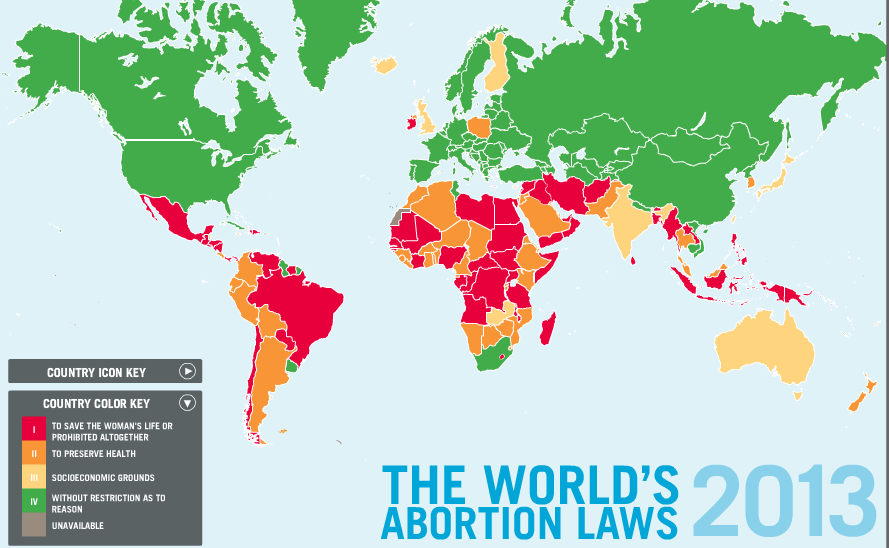
On this point, Christian ultra-conservativism agrees with the point of view of the Malik school of law among Muslims. In essence, Christian terrorists are attempting to move the United States on the below map away from a modern European norm, where abortion is elective up to a certain point in pregnancy, to an Afro-Asian and Maliki Muslim norm where it is often forbidden except to save the mother’s life (or not even then).

4541

…

The same Christian fundamentalists who fulminate most loudly against “sharia law” (medieval Muslim canon law) are perfectly happy to impose their own, Christian sharia on secular American society. Some of them are willing to deploy violence to that end, making them religious terrorists. But on this issue, there increasingly isn’t much difference between the American Republican Party and the Wahhabi clerics in their Riyadh madrasas. In both cases, religious, theological doctrines are being made the basis of public law, which is un-American and actually unconstitutional (the First Amendment refers to that as Establishment of religion, which it forbids).

Emphasis Mine

The Capitalists desire control and are willing to align themselves with those who are willing and able to exercise control on their behalf. Class warfare is brutal, and the Capitalists want brutal people to keep Capitalism going.

This is where Fascism keeps coming up. It is the iron fist ready to smash any in-roads into the profitability of big business. Although Fascism starts out as a protest against the ravages of Capitalism on the petite bourgeoise, it morphs into a rabid defender of Capitalism because it cannot conceive of an alternative economic system. It just wants to get the wrong people out of running Capitalism.

Thus, the media supports White Terrorism by treating it differently. This is because the White Terrorists are aligned to the political agenda of the Capitalists. As such they are not fighting the system, they are preventing the system from falling into the wrong hands.

Cole also lists Top Ten differences between White Terrorists and Others

5. White terrorists are part of a “fringe.” Other terrorists are apparently mainstream.

6. White terrorists are random events, like tornadoes. Other terrorists are long-running conspiracies.

7. White terrorists are never called “white.” But other terrorists are given ethnic affiliations.

8. Nobody thinks white terrorists are typical of white people. But other terrorists are considered paragons of their societies.

Emphasis Mine

And this is how the media continues to construct racism, and to convince people that the victims of terrorism are actually terrorists. This then reinforces the racism of the proto-Fascists and eventually turns abstract racism into concrete racism.


Read more!

2015/10/17

Chris Dillow: Conning the working-class

Chris Dillow writes about how Capitalists are Conning the working-class.

Some laboratory experiments (pdf) by Philip J. Grossman and Mana Komai have shown how strong such within-class envy can be. They show that some of the poor are willing to attack other poor people even at their own expense. They conclude:

We find strong evidence of within class envy: the rich targeting the rich and the poor targeting the poor…Within the poor community, the target of envy is usually a poorer subject whose wealth is close to the attacker; the attacker may possibly be trying to preserve his/her relative ranking.

I say all this for a reason. It's tempting for lefties to believe that people vote Tory because of "neoliberal" ideology and the right-wing media. But there might be more to it than this. Even without such propaganda, there are cognitive biases at work which undermine class solidarity. I fear some on the left underestimate this fact because of the same cognitive bias which contributed to that woman voting Tory - wishful thinking.

Emphasis Mine

Yes, the divisions within the working class are based on cognitive biases. But these biases are fostered and engendered through Capitalism.

There is no natural way these biases can be overcome except through conscious action and though on the part of the working class.

Only we can liberate ourselves. There is no magic cure to Capitalism except the revolutionary change that originates in ourselves.


Read more!